50 Stunning Hummingbird Pictures – B & B

Ruby-throated Hummingbird by Ray's Wildlife

Ruby-throated Hummingbird by Ray’s Wildlife

“So God created great sea creatures and every living thing that moves, with which the waters abounded, according to their kind, and every winged bird according to its kind. And God saw that it was good. And God blessed them, saying, “Be fruitful and multiply, and fill the waters in the seas, and let birds multiply on the earth.” So the evening and the morning were the fifth day.” (Genesis 1:21-23 NKJV)

You have got to check out this interesting article from Birds & Blooms!!

50 Stunning Hummingbird Pictures You Need To See

Still haven’t been doing much birdwatching lately, except through my back door. So, I trust you will enjoy these great photos. We have had some nice photos of hummingbirds here over the years, but these are all right together.

Ruby-topaz Hummingbird (Chrysolampis mosquitus) Male ©WikiC

Some of our previous Hummingbird articles:

Ten Beautiful Hummingbirds

Hummingbirds See Colors Over (Beyond) the Rainbow

How Much Are You Being Monitored? A Hummingbird Lesson

Hummingbird from John 10:10 Project

Tickle Me Tuesday – Hummingbirds

Peru’s Marvellous Hummingbird – Again

Creation Moments – Double Life of the Hummingbird

Hummingbirds in Ultra Slow Motion

Hummingbird Families – Firecrowns

Calliope Hummingbirds – North America’s Smallest

Wordless Birds – Hummingbirds

New Duck In The Yard

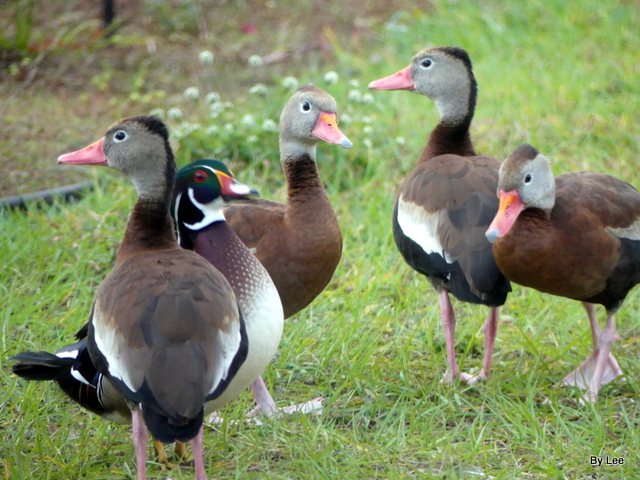
Wood Duck among Black-bellied Whistling Ducks by Lee

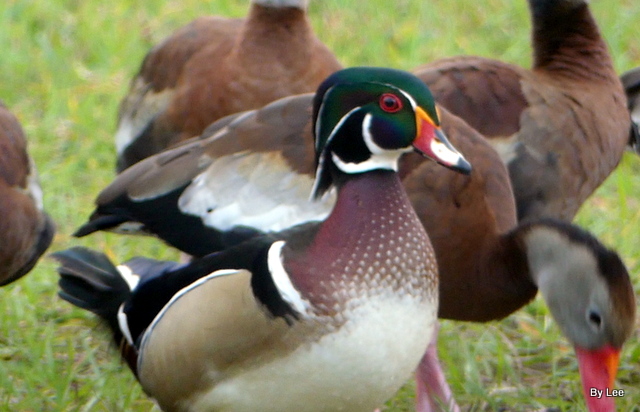
Yesterday we added a new bird to our backyard list. He tried to hide, but with a look like that, it’s hard to do. So finally, he came out of hiding. Some of those Whistling Ducks don’t seem to be too happy with him being there. [I was very happy! :) ]

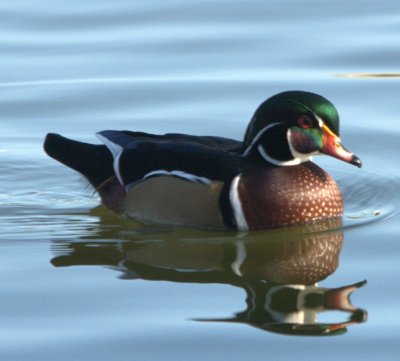
Wood Duck in our yard. 1-17-22

We’ve written about this beautiful bird before, but usually, we have seen them over in Lakeland on their lakes. So, this was a treat to be able to have him visit us.

When I see this duck, I think about how the Lord when he created these Avian Wonders must have had a delight in decorating this Wood Duck. What clear lines!

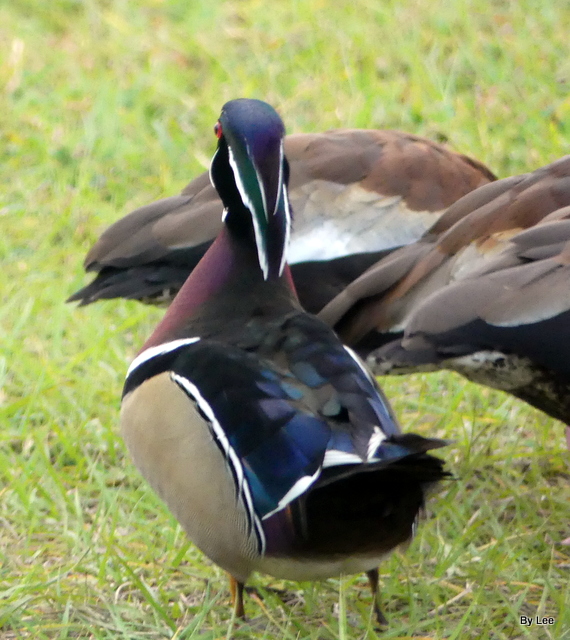
Wood Duck’s Crested Head and Back

I have to admit that the Duck had a bit of an attitude. While he was strutting around, ever so often he would throw his head like he was trying to flip that long “bonnet” of his. [my term] I tried to capture it on video, but I was only able to capture it once.

https://youtu.be/ugJdSeL5gNo&rel=0

Several verses came to mind about this encounter with our beautiful duck:

The first photo, where he was sort of hidden behind the others.

“Ye are the light of the world. A city that is set on an hill cannot be hid. Neither do men light a candle, and put it under a bushel, but on a candlestick; and it giveth light unto all that are in the house. Let your light so shine before men, that they may see your good works, and glorify your Father which is in heaven.” (Matthew 5:14-16 KJV)

We should not be afraid to let our Christianity be seen. Also, the look on the faces reminds me of how some people react to us when we do accept the Lord as our Savior.

Other Information:

All About Birds – Wood Duck

While putting these links about Wood Ducks here, I discovered that a Wood Duck and it’s mate HAS been here. I was surprised.

  1. Our Ducky Backyard
  2. Wood Duck
  3. Paintbrush Birds – Wood Ducks
  4. Lee’s One Word Monday – 3/28/16

Birds of the Bible – Foundation Reviews in 2022

Wood Duck (Aix sponsa) by Dan

Wood Duck (Aix sponsa) by Dan

Wow! Looking over the previous articles that have been written through the years on our blog, I thought it would be nice to read through some of our many posts.

To build a house, you need a foundation. To build a blog, you need a foundation. So, our foundation from the beginning for Lee’s Birdwatching Adventures Plus, has always been this:

“For no other foundation can anyone lay than that which is laid, which is Jesus Christ.” (1 Corinthians 3:11 NKJV)

He created our world, universe, us, and all His Avian Wonders, which we like to write about. We love to write about His birds and how we can learn from them. We’ve done our best, with a few stumbles here and there, but we have tried to honor Him through it all. He has been gracious to send me extra writers, photographers, and friends along this journey.

My thanks to Him, these extra hands to assist, my husband, and all of you who have visited us along the way.

Now, what has been written about the Foundations? Let’s take a look:
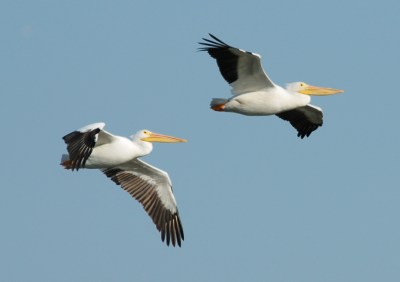
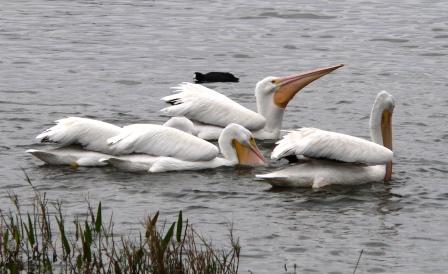
White Pelicans in Flight - Circle B Bar by Dan

White Pelicans in Flight – Circle B Bar

Birds of the Bible – Foundation #1 (2009) and then Foundation #1 Updated (2015)

These two posts explain about the beginning of birds and how they came to be here.
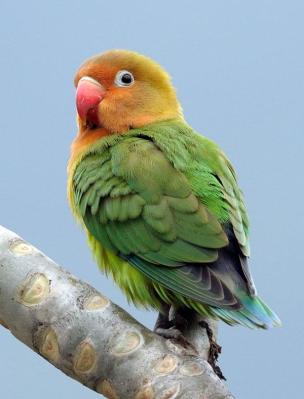
Fischer’s Lovebird (Agapornis fischeri) by W Kwong

Birds of the Bible – Foundation #2 (2009) and then Foundation #2 Updated (2015)

In Genesis Chapter 2, the birds and animals were named, but what happened in Chapter 3 caused the birds to be cursed and death now became a reality to them and others. But there is hope.
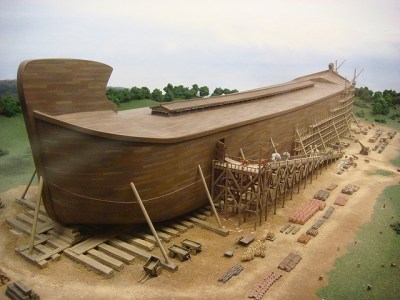
Noah’s Ark ©©Flickr elmada

Birds of the Bible – Foundation #3 (2009) and then Foundation #3 Updated (2015)

Now we find God has a plan to preserve the life of some of the people, animals, and the birds by having them enter the Ark.
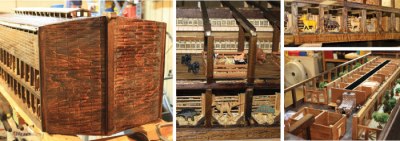
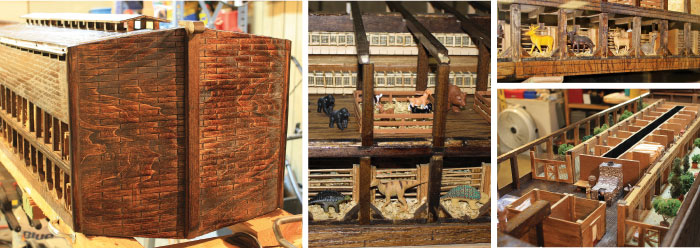
Ernesto Carrasco’s Noah’s Ark Model

Birds of the Bible – Foundation #4 (2009) and then Foundation #4 Updated (2016)

What did the birds encounter as they came off the ark and afterwards?

Rainbow-clouds.© Readers Digest

Rainbow-clouds ©Readers Digest

Birds of the Bible – Foundation #5 (2009) – Not Updated Yet (Stay tuned)

This post presents many of the “theories” about where birds came from, versus how the creationist view where and how the Avian Wonders of this world came into being.

We trust you will enjoy reading (or re-reading_ through these Foundation of the Birds of the Bible posts.
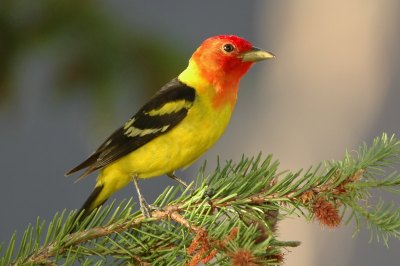
Western Tanager: Red, Yellow, Black and White

Birds of the Bible

Birds of the Bible – Introduced Here In 2008

ln honor of the Top 100 Bird Blogs and Websites For Ornithologists and Bird Lovers rating they gave us, [#20] here is a copy of that very first blog on Feb. 16, 2008.

American White Pelicans at Lake Hollingsworth

American White Pelicans at Lake Hollingsworth

Goal: To encourage your understanding and help you form a mental picture of the fowls or birds of the air found in scripture.

God has created the fowls and birds and they are mentioned throughout the Bible. When you read the name of a bird, does a mental picture come to view or do you just keep reading without a thought to what you just read? Sure, you know some of them, like the Eagle or a Sparrow, but how about a Bittern, Ossifrage, Hoopoe, or Lapwing? Not just their names are important, but how about the illustrations that use birds to teach lessons? God’s care, strength, provision and other lessons are taught with birds as the examples.

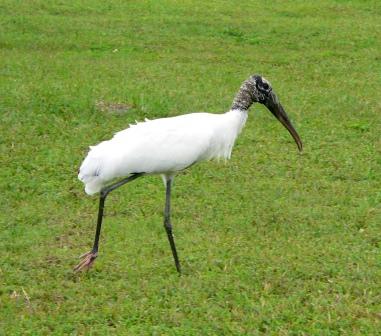
Wood Stork

“But now ask the beasts, and they will teach you; And the birds of the air, and they will tell you;” Job 12:7

So, let’s get started with:

The Birds of the Bible

“Then God said, ‘Let the waters abound with an abundance of living creatures, and let birds fly above the earth across the face of the firmament of the heavens.’ So God created great sea creatures and every living thing that moves, with which the waters abounded, according to their kind, and every winged bird according to its kind. And God saw that it was good. And God blessed them, saying, ‘Be fruitful and multiply, and fill the waters in the seas, and let birds multiply on the earth.’ So the evening and the morning were the fifth day.” Gen 1: 20-23

Here we see that God created the birds on day five of creation and that “it was good.”

“Out of the ground the LORD God formed every beast of the field and every bird of the air, and brought them to Adam to see what he would call them. And whatever Adam called each living creature, that was its name.” Gen 2:19-20a

Adam was given the privilege of giving all the “critters” their names. Were there as many varieties of birds then as now? There have been changes within the species (kinds), but not evolution (changing from one kind to another kind).

Depending on which copy of the Bible you use, here are some of the names of birds mentioned in the Bible. These will be introduced in following blogs. Not necessarily in the following order.
; Chicken; Cormorant; Crane; Cuckoo; Dove; Eagle; Falcon; Glede; Hawk; Hen; Heron; Hoopoe; Kite; Lapwing; Night Hawk; Osprey; Ossifrage; Ostrich; Owl; Partridge; Peacock; Pelican; Pigeon; Quail; Raven; Sparrow; Stork; Swallow; Swan; Vulture


House Sparrows visiting National Aviary Parrot Show by Lee

House Sparrows visiting NA Parrot Show Outside

“Look at the birds of the air, for they neither sow nor reap nor gather into barns; yet your heavenly Father feeds them. Are you not of more value than they?” (Matthew 6:26 NKJV)

Now it is 2022, and time to revisit these wonderful Birds of the Bible. Because of the Covid situation, we haven’t really been birdwatching much in almost two years. Yet, that doesn’t mean it’s time the “throw in the towel”, or the blog, in this case. So, we plan on writing more Birds of the Bible articles about the different Avian Wonders found in the Bible. Trying to bring in fresh material as we review the previous birds that we have written about. We will even ask some of our current writers like Dr. J. J. S. Johnson (Dr. Jim) and William Wise to join in.  Will also try to update the all the links to these articles.

STAY TUNED!

What An Honor – Top 100 Bird Blogs and Websites

Sunday Inspiration – Christmas Birds Revisited 2021

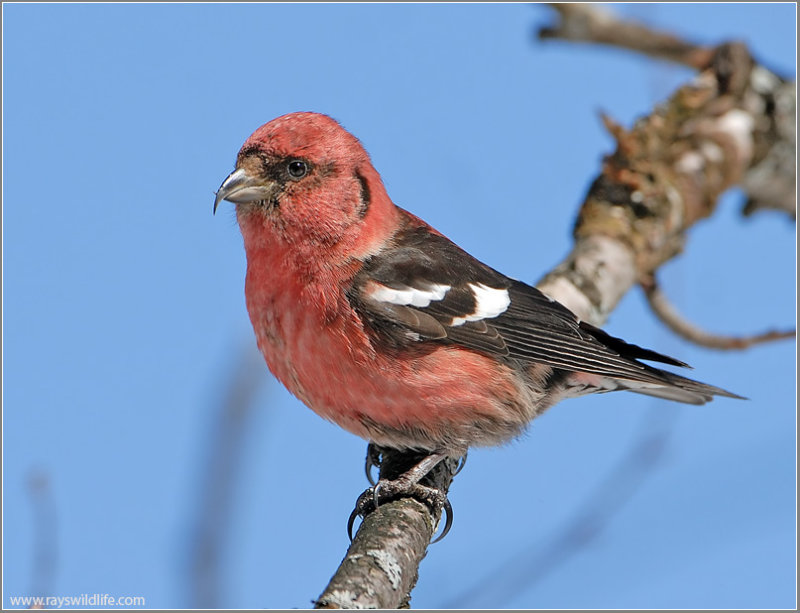
Two-barred Crossbill (Loxia leucoptera)(White-winged) by Raymond Barlow

Two-barred Crossbill (Loxia leucoptera)(White-winged) by Raymond Barlow

Now when Jesus was born in Bethlehem of Judaea in the days of Herod the king, behold, there came wise men from the east to Jerusalem, Saying, Where is he that is born King of the Jews? for we have seen his star in the east, and are come to worship him. (Matthew 2:1-2 KJV)

Thought you might enjoy a Christmas post from the past. (2012)

Today I am doing something a little different. Instead of a song, there is a short Christmas message from my pastor. This was given during the Camel Lot Christmas Musical that we had in 2012. It applies for today, as well. Listen to Pastor Nathan Osborne III as you watch some of the Lord Jesus Christ’s creation among the birds.

The birth of the Jesus, His death on the cross and His resurrection are all a part of Christmas.

This slideshow requires JavaScript.

Our Pastor at the Christmas Camel Lot Musical – 2012

*

(Started adding Christmas colored birds, but then added newer photos from this year.)

Sunday Inspirations

Some Previous Christmas Articles

Eagles Wings – From Creation Moments

Isaiah 40:30-31

“Even the youths shall faint and be weary, and the young men shall utterly fall: but they that wait upon the LORD shall renew their strength; they shall mount up with wings as eagles; they shall run, and not be weary; and they shall walk, and not faint.”

As I sit in my backyard, enjoying some springtime sunshine while writing this script, my eyes are drawn to a pair of shapes, silhouetted against a bright sky, circling over the Cowlitz River. They look dark from where I am sitting, but I know that if they landed, they would not be so dark, and they would have white heads. They are eagles. A pair of them have been around this area since we moved here about three years ago.
I love the way that eagles seem to fly as if they are not flying. They catch the air currents, and their large outstretched wings enjoy a lift force which is not from their own muscles, but from those air currents. To maintain that height for so long by their own muscle power would be too tiring for such large, flying birds.

The way that these eagles soar is used in the Bible as a beautiful illustration of God’s grace. In Isaiah 40:31 we read:

“They who wait for the LORD shall renew their strength; they shall mount up with wings like eagles; they shall run and not be weary; they shall walk and not faint.”

One can imagine that getting into the air, and flying high would cause the eagle to lose energy. But then it can rest and renew its strength. The Lord reminds us, through the things that He has created, that we should wait upon Him and rely on His strength.

Prayer: Help us, Father God, to wait for You, and to renew our strength through the grace that You give us. Amen.

Author: Paul F. Taylor

Ref:  With Wings Like Eagles , accessed 4/24/2020. Image: David R. Tribble, CC BY-SA 4.0 International.

© 2021 Creation Moments. Eagles Wings [Used with permission]

More Articles from Creation Moments

Who Paints The Leaves?

Psalm 91 “Shadow of the Almighty” – Pastor Totman

Under His Wings - (Dove - photographer unknown)

Under His Wings – by Ric Seet

“He that dwelleth in the secret place of the most High shall abide under the shadow of the Almighty. I will say of the LORD, He is my refuge and my fortress: my God; in him will I trust.” (Psalms 91:1-2 KJV)

We had a fantastic message yesterday from our Pastor, Dave Totman. It was based on Psalm 91, “Shadow of the Almighty.”

Needless to say, there were many references to our Creator’s Avian Wonders. Just thought you would enjoy watching this.

Praise the Lord for His watch care and protection of us!

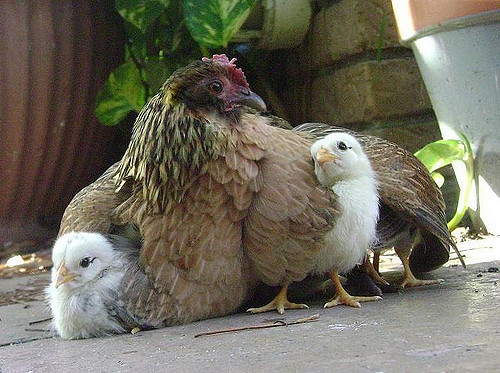
Gathering Her Chicks Under Her Wings

“He shall cover thee with his feathers, and under his wings shalt thou trust: his truth shall be thy shield and buckler. Thou shalt not be afraid for the terror by night; nor for the arrow that flieth by day;” (Psalms 91:4-5 KJV)

Here is a Killdeer protecting her eggs from a farm tractor. Almost hard to watch. [But it turns out okay!]

https://youtu.be/_aC2N5s0B2k&rel=o

Good News

From 10,758 to 10,912 Living Species

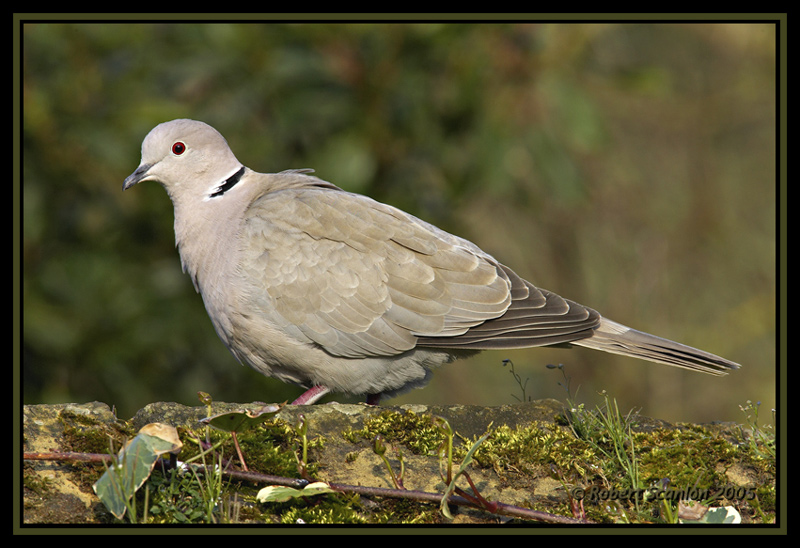
Collared Dove (Streptopelia decaocto) by Robert Scanlon. Now there’s a Burmese Collard Dove (Streptopelia xanthocycla) split off from it.

Wow! Since I last updated the World Bird List here on this site, 154 new Species have been added, 4 Orders have been added, 2 Families have been added, and 52 Genera have been added in the last two years.

This is what was last count in 2019:

Version 9.2 (June 22, 2019)

The IOC World Bird List 9.2 contains 10,758 extant species (and 158 extinct species) classified in 40 Orders,  250 Families and 2,320 Genera.  The list also includes 20,034 subspecies, their ranges and  authors.

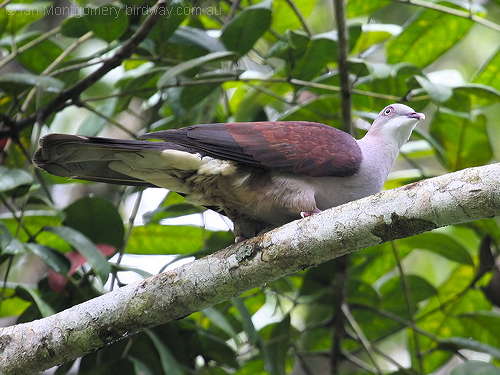
Mountain Imperial-Pigeon (Ducula badia) by Ian

Mountain Imperial-Pigeon (Ducula badia) by Ian. Now there’s a Malabar Imperial Pigeon Ducula cuprea is split from Mountain Imperial Pigeon Ducula badia.

This is the new count:

Version 11.2 (July 15, 2021)

The IOC World Bird List 11.2 contains 10,912 extant species (and 160 extinct species) classified in 44 Orders, 252 Families and 2,372 Genera.  The list also includes 19,889 subspecies, their ranges and authors.

Over the next few days, (or weeks) I hope to update our pages to the current list. Because of Covid concerns (no birding), and some health issues, I have neglected to update these. I am curious as to what they have added and deleted in the last few years. Stay tuned!

“For I am the LORD, I change not;” (Malachi 3:6 KJV)

Thankfully, Our Lord does not change!!

I did list some of the changes to the 10.1 version, but didn’t update the site. See:

World Bird Names Changes Version 10.1

I just discovered these Name Changes to 10.1 as I was finishing this article up. I just may do the same for 10.2 and 11.1 versions so you can see the changes in smaller batches. Stay tuned some more!

So, expect the links to the list to be changing as this process is on going:

World Bird List

Species

Orders

Families


Reviewing Avian and Attributes

American Avocet (Recurvirostra americana) by Jim Fenton

American Avocet (Recurvirostra americana) by Jim Fenton

August 14, 2017 the Avian and Attributes series was started. The first of the series was Avian and Attributes – Almighty.

I stated that, “A good friend of mine, Rhonda Sawtelle, (Create a Positive Day), has been posting every day on her Facebook a different attribute of our Lord God. She has been going through them alphabetically. What if each day, we had a different attribute and a bird that starts with that same letter. My challenge is to try to at least get through the alphabet at least once. Maybe several rounds. Stay tuned!” [By the way, she still has her blog.] I did manage to come up with at least an attribute and a bird for each letter of the alphabet, though I pushed it a few times, like with “X”.

If you would like to review them, or see them for the first time, see below. You can also find this list in the left menu as Avian and Attributes.

Avian and Attributes Articles:

A:

Admirable – Admirable Hummingbird

Almighty – American Avocet

Always There (Omnipresent) – American Bittern

Ancient (of Days) – Ancient Murrelet

Apostle’s Teacher – Apostlebird

B:

Beautiful – Beautiful Firetail

Bishop – Bishop Oo

Blood – Blood Partridge

Bountiful/Bountifully – Bounty Shag

Bush (Hosted God) – Bush Blackcap

Busy – Buzzing Flowerpiercer

C:

Captain – Celestial Monarch

Cheer – Cheer Pheasant

Clay (Potter) – Clay-colored Sparrow and Thrush

Cloud – Cloud Cisticola , Cloud-forest Pygmy Owl and C-F Screech Owl

Cook – Cook Reed Warbler, Cook’s Swift and Petrel

Creator – Major Mitchell’s Cockatoo

Creator – Creator of the Garden

Crowned I – First Four “Crowned” Birds – 1

Crowned II – Last Four “Crowned” Birds – 2

D:

David’s – David’s Fulvetta

Deliverer – Dove

Diadem – Diademed Tanager

Diademed – Diademed Amazon, Sandpiper-Plover, and Tapaculo

Diamond – Diamond Dove and Diamond Firetail 

E:

Ear(ed) – Eared Birds

Elegant – 13 Elegant Birds

Emerald – Emerald Birds

Ensign – Emperor Bird-of-Paradise

Everlasting – Bald Eagle

F:

Faithful – Peregrine Falcon

Fearful – Fearful Owl

Fire – Fire Birds

Flame – Flame Birds

Fortress – Flame Robin

Friend/Friendly – Friendly Bush Warbler and Friendly Fantail

G:

Garden [Creator of The Garden] – Garden Emerald and Garden Warbler

Glistening – Glistening-green Tanager

Glittering – Glittering Birds

Glowing – Glowing Puffleg

Gracious – Graceful Honeyeater

Glorious – Ruffed Grouse

H:

Helper – Hamerkop

Hill – Hill Birds

Holy – Lewin’s Honeyeater

Horn(ed) – Horn Birds

House – House Birds

I:

Immutable – Marshall’s Iora

Imperial – Imperial Birds

Invisible – Invisible Rail

J:

Judge – Joyful Greenbul

Justifier – Rufous-tailed Jacamar

K:

Kind – Kaempfer’s Woodpecker

King – Grey Kingbird

L:

Light – Light-mantled Albatross

Lord – Lord Derby and Lord Howe Birds

Love – Fischer’s Lovebird

M:

Majestic – Magnificent Frigatebird

Mercy – Chestnut-breasted Malkoha

Magnificent – Magnificent Birds

Mocking – Mocking Cliff Chat

Morning – Morningbird

Mount – Mount Birds

Mountain – Mountain Birds

Mute – Mute Swan

Myrtle – Myrtle Warbler

N:

Naked – Naked-faced Barbet and Spiderhunter

Name Above All Names – Common Nightingale

Nazarene – Nazca Booby

Night – Night Parrot

Noble – Noble Snipe

O:

Omnipotent – Great Horned Owl

Omnipresence – Orange-bellied Leafbird

P:

Palm – Palm Birds

Paradise – Paradise Birds

Peace – Peaceful Dove

Pearl – Pearl Kite

Pilot – Pilotbird

Providence – Parrot-billed Sparrow

Purple -Purple Birds

Q:

Quickens – Resplendent Quetzal

Quiets Our Fears – Queen Carola’s Parotia

R:

Rainbow –  Rainbow Birds

Redeemer – Brazilian Ruby

Reed – Reed Cormorant and Parrotbill

Reunion – Reunion Birds

Ring – Ring Ouzel

River – River Birds

Rock – Rock Dove

Royal – Royal Birds

Ruby/Rubies – “Ruby-” Birds

S:

Sacred – Sacred Kingfisher

Sad – Sad Flycatcher

Sand – Sand Birds

Sapphire – Sapphire Birds

Scale – Scale- Birds

Scarlet – Scarlet Birds

Scarlet – Scarlet-plus Birds

Screaming – Cowbird and Piha

Seaside – Seaside Sparrow

Shade – Shade Bush Warbler

Sharp – Part I

Sharp – Part II

Shepherd – Mute Swan

Song – Song Sparrow

Star – Star Birds

Step – Steppe Eagle

Stephen – Stephen’s Lorikeet

Stitch – Stitchbird

Stone – Stone Partridge

Stripes – Striped-backed Birds

Strong – Strong-billed Birds

Sun – Sun Birds

Superb – Superb Birds

Sword – Sword-billed Hummingbird

T:

Tears – Teardrop White Eye

Three (in One) – Three-banded Courser

Torrent – Torrent Birds

Truth – White-winged Triller

U:

Undefiled – Umbrellabird

Unreproveable – Unspotted Saw-whet Owl

V:

Variableness (No) – Variable Sunbird

Vine – Vireos

W:

Way – White-eyes

Willing – Willet

X:

X-Excellence – Xingu Scale-backed Antbird

X-Exalted – Xenops

Y:

Yahweh – Yellowthroat

Yoke – Yellow-crowned Bishop

Z:

Zeal – Zenaida Dove

Zoologist – Zone-Tailed Hawk

Paintbrush Birds – Painted Bunting

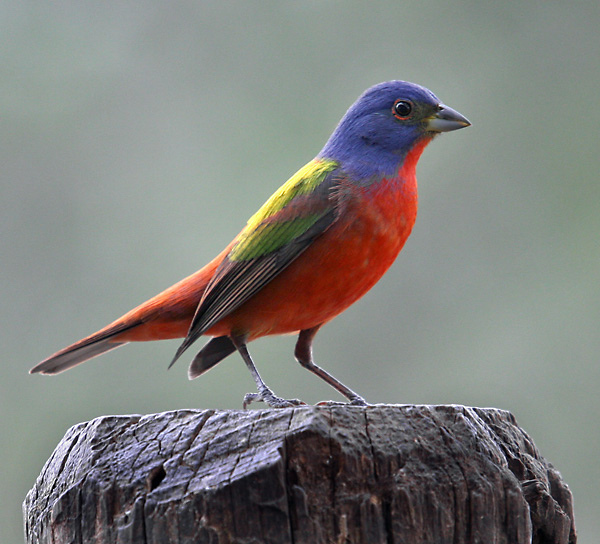
Painted Bunting Subspecies (Passerina ciris ciris) ©WikiC

Every since my first encounter with a Painted Bunting, they have been one of top favorites. [notice I have lots of favorites :)] When we lived in south Florida, I turned to look out my window and saw one of the Avian Wonders on my feeder hanging under the awning. Wow!!! I am sure my eyes were about ready to pop out!! What a beauty! This definitely qualifies for a Paintbrush Bird. In fact, it looks like the Creator had several bushes with a dab of color on each and painted these gorgeous birds.

Painted Bunting (Passerina ciris) ©Flickr Ralph Arvesen

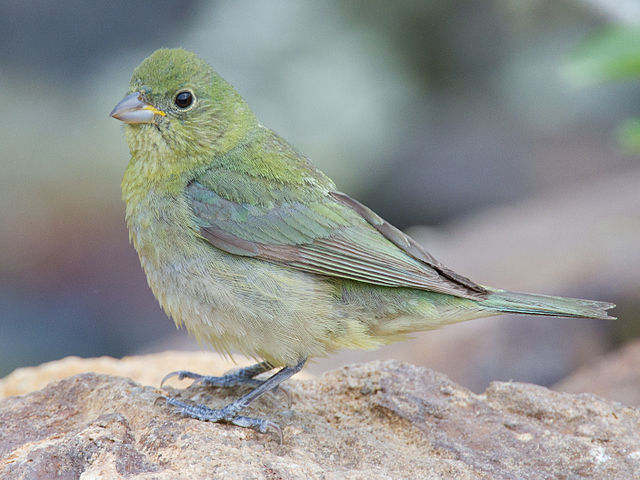
The male painted bunting is often described as the most beautiful bird in North America and as such has been nicknamed nonpareil, or “without equal”. Its colors, dark blue head, green back, red rump, and underparts, make it extremely easy to identify, but it can still be difficult to spot since it often skulks in foliage even when it is singing. The plumage of female and juvenile painted buntings is green and yellow-green, serving as camouflage. Once seen, the adult female is still distinctive, since it is a brighter, truer green than other similar songbirds.

Painted Bunting – Female ©WikiC Dan_Pancamo

The juveniles have two inserted molts in their first autumn, each yielding plumage like an adult female. 

The painted bunting occupies typical habitat for a member of its family. It is found in thickets, woodland edges with riparian thickets, shrubbery and brushy areas. In the east, the species breeds in maritime hammocks and scrub communities. Today, it is often found along roadsides and in suburban areas, and in gardens with dense, shrubby vegetation. The wintering habitat is typically the shrubby edges along the border of tropical forests or densely vegetated savanna. The breeding range is divided into two geographically separate areas. These include southern Arizona, southern New Mexico, southern and eastern Texas, Oklahoma, Arkansas, Louisiana, northern Florida, coastal Georgia, the southern coast and inland waterways such as the Santee River of South Carolina and northern Mexico. They winter in South Florida, Cuba, the Bahamas, along both coasts of Mexico and through much of Central America. Occasionally, they may be vagrants further north, including to New York, Pennsylvania, and New Jersey. The bird is also found every few years as far north as New Brunswick, Canada. (Wikipedia, with editing)

Great Verses:

“Now Israel loved Joseph more than all his children, because he was the son of his old age. Also he made him a tunic of many colors.” (Genesis 37:3 NKJV)

“The rainbow shall be in the cloud, and I will look on it to remember the everlasting covenant between God and every living creature of all flesh that is on the earth.” (Genesis 9:16 NKJV) [Maybe the Lord gave us a “small reminder” of His rainbow for bright sunny days when our Painted Bunting is flitting about.]

See More Paintbrush Birds:

Other post about the Painted Bunting:

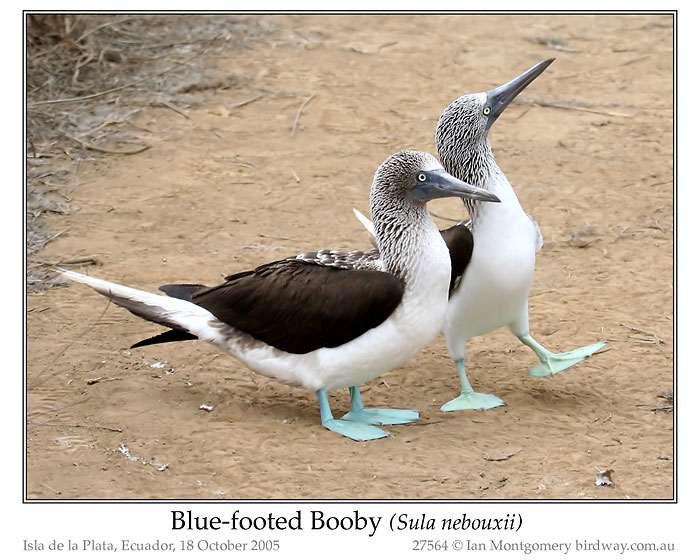
Paintbrush Birds – Blue-footed Booby

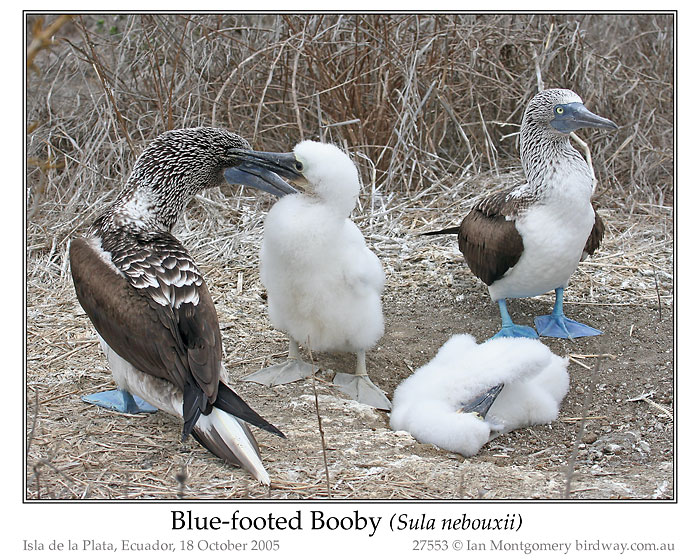
Blue-footed Booby (Sula nebouxii) by Ian

Blue-footed Booby (Sula nebouxii) by Ian

The Blue-footed Booby is not what you might think of as a “Paintbrush Bird,” but I thought that the color of his feet qualifies him. :)

Actually, these feet look more like he stepped into a bucket of paint, instead of a Paintbrush being used on them. Yet, we know that their the Creator made those feet blue with His Creative Touch.

The young are not born with blue feet, but eventually their feet will turn blue. 

Blue-footed Boobies with young by Ian

From Wikipedia: “The blue-footed booby (Sula nebouxii) is a marine bird native to subtropical and tropical regions of the eastern Pacific Ocean. It is one of six species of the genus Sula – known as boobies. It is easily recognizable by its distinctive bright blue feet, which is a sexually selected trait. Males display their feet in an elaborate mating ritual by lifting them up and down while strutting before the female. The female is slightly larger than the male and can measure up to 90 cm (35 in) long with a wingspan up to 1.5 m (5 ft).

The natural breeding habitats of the blue-footed booby are the tropical and subtropical islands of the Pacific Ocean. It can be found from the Gulf of California south along the western coasts of Central and South America to Peru. About half of all breeding pairs nest on the Galápagos Islands. Its diet mainly consists of fish, which it obtains by diving and sometimes swimming under water in search of its prey. It sometimes hunts alone, but usually hunts in groups.

Blue-footed Boobie by Ian

Great Verses to consider:

“My help comes from the LORD, Who made heaven and earth. He will not allow your foot to be moved; He who keeps you will not slumber.” (Psalms 121:2-3 NKJV)

“Ponder the path of your feet, And let all your ways be established. Do not turn to the right or the left; Remove your foot from evil.” (Proverbs 4:26-27 NKJV)

“A man’s heart plans his way, But the LORD directs his steps.” (Proverbs 16:9 NKJV)

See other Blue-footed Booby posts:

More Paintbrush Birds:

4 Things God Wants You to Know

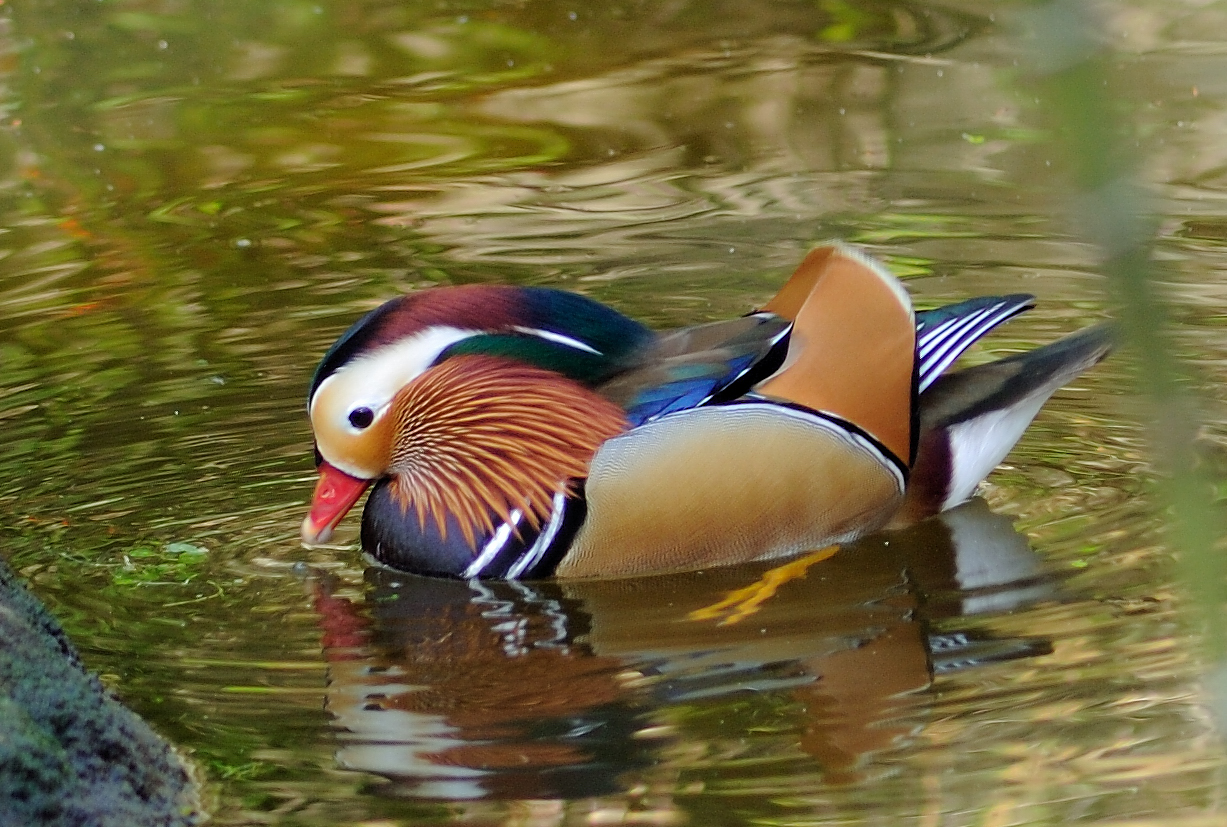
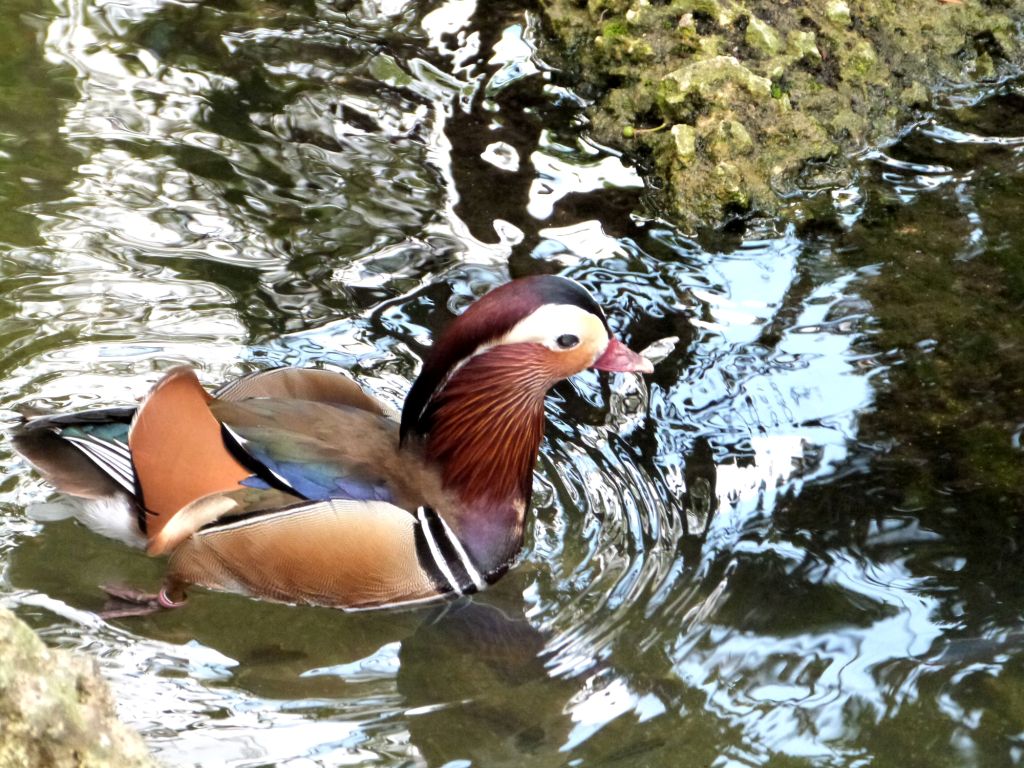
Paintbrush Birds – Mandarin Duck

Mandarin Duck (Aix galericulata) by

Mandarin Duck (Aix galericulata) by Dan

Description and Details

The Mandarin Duck is definitely one of Our Creator’s Masterpieces, far as I’m concerned. I love my local Wood Ducks, but this duck is absolutely one of my favorites! My first glimpse of the Mandarin Ducks was at the Miami Zoo, now Zoo Miami, years ago. They have such clean lines and details that were and are just breathtaking! Later we viewed them many times at the Lowry Park Zoo in Tampa, now Zoo Tampa.

Mandarin Duck (Aix galericulata) Zoo Miami by Lee

Mandarin Duck (Aix galericulata) Zoo Miami by Lee

“In the wild, mandarin ducks breed in densely wooded areas near shallow lakes, marshes or ponds. They nest in cavities in trees close to water and during the spring, the females lay their eggs in the tree’s cavity after mating. A single clutch of nine to twelve eggs is laid in April or May. Although the male may defend the brooding female and his eggs during incubation, he himself does not incubate the eggs and leaves before they hatch. Shortly after the ducklings hatch, their mother flies to the ground and coaxes the ducklings to leap from the nest. After all of the ducklings are out of the tree, they will follow their mother to a nearby body of water.

Mandarins feed by dabbling or walking on land. They mainly eat plants and seeds, especially beech mast. The species will also add snails, insects and small fish to its diet. The diet of mandarin ducks changes seasonally; in the fall and winter, they mostly eat acorns and grains. In the spring, they mostly eat insects, snails, fish and aquatic plants. In the summer, they eat dew worms, small fish, frogs, mollusks, and small snakes. They feed mainly near dawn or dusk, perching in trees or on the ground during the day.” (Wikipedia with editing)
 

The Mandarin Duck has been featured before, and some of those articles are linked below. I rediscovered this video that I took at the Zoo:

Great Verses:

“And on the seventh day God ended his work which he had made; and he rested on the seventh day from all his work which he had made. And God blessed the seventh day, and sanctified it: because that in it he had rested from all his work which God created and made.” (Genesis 2:2-3 KJV)

“Have you not known? Have you not heard? The everlasting God, the LORD, The Creator of the ends of the earth, Neither faints nor is weary. His understanding is unsearchable.” (Isaiah 40:28 NKJV)


Previous Posts about the Mandarin Duck:

Gideon